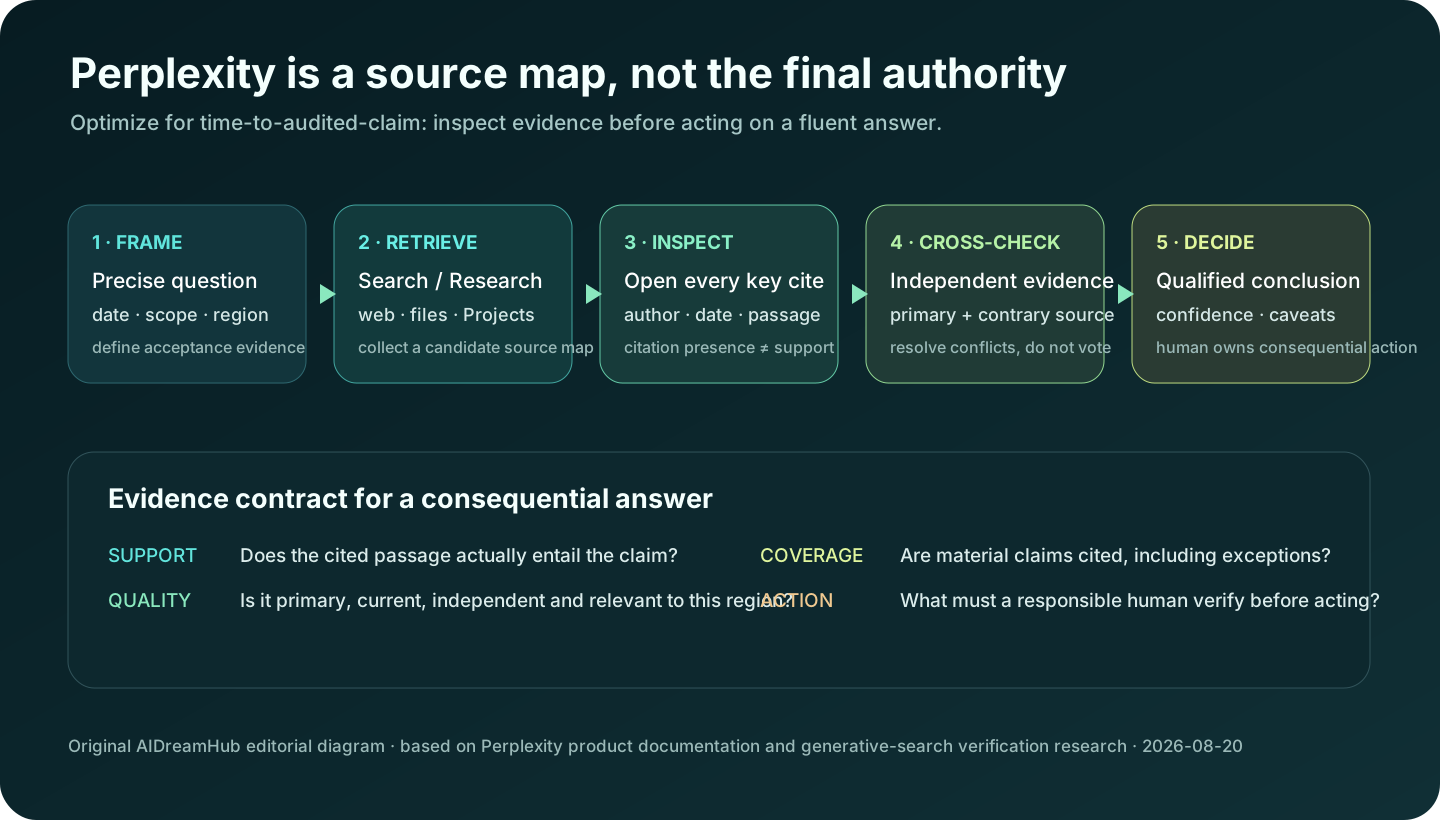
Perplexity
Perplexity is an AI search and research platform with citations. This independent review covers verification, pricing, privacy, limitations and alternatives.
PerplexityAI searchresearch
3160
An API built for AI agents that turns entire websites into LLM-ready markdown or structured data.
279
Views
0
Likes
Mar 2026
Added
github.com
Website
Editorial Review
Firecrawl is a powerful API built for AI agents to easily turn entire websites into structured data and LLM-ready markdown. It handles all the complex parts of web scraping like JavaScript rendering, proxies, and deep crawling, giving you clean data without the headache.
It's heavily used by AI developers building autonomous agents that need real-time data from the web, and startups training domain-specific models who need to scrape thousands of pages quickly and cleanly.
Honestly, there's something slightly unsettling about an API designed specifically to strip websites bare and feed them directly into LLMs. Half the dev community loves it because writing custom scraping scripts in 2026 is soul-crushing, while the other half is terrified for their site's traffic. But I keep coming back to how well it actually works. It just completely eliminates the pain of dealing with CAPTCHAs and React-rendered junk. If you're building an agent, you basically have to use this or something like it, whether you like the implications or not.
Firecrawl should be evaluated against a real user job rather than a polished demonstration. Use it when its supported runtime, model providers, deployment surface, and permission model match the way your team already builds and reviews software. A good demo is not enough: test it against a real repository, data set, or production-like workload.
Start with one bounded task and a disposable branch or sandbox. Capture the input, configuration, model/version, output, tests, and failure mode. Expand to team use only after the result is repeatable and the permission, audit, and rollback paths are understood.
Open-source availability does not guarantee active maintenance, secure defaults, stable APIs, or production support. Hosted versions may collect different data than self-hosted versions. Model quality, provider limits, and dependency updates can change results without a visible change to the tool's interface.
Compare at least one simpler library or deterministic workflow, one adjacent open-source project, and one managed service. The best alternative is the option that meets the same task with less operational burden—not merely the product with the closest marketing category.
Treat production readiness as a property of the exact version and deployment, not the project name. Verify maintenance, tests, security controls, observability, failure recovery, upgrade policy, and performance on your own workload.
Measure successful task completion, human correction time, latency, total model or infrastructure cost, data exposure, failure rate, and whether another engineer can reproduce the result from the recorded configuration.
Prefer a smaller library or deterministic workflow when the task is stable, errors are expensive, permissions are broad, or the team cannot operate another model-serving or agent layer.
This evaluation framework was reviewed on 25 July 2026. The link below is the website currently stored for this listing; it may be an official product page, repository, app-store entry, regional page, or third-party service. Confirm ownership and current terms before signing in, paying, installing software, or uploading data.
Visit the official website to get started
Have an AI tool to share?
Get your product in front of people actively exploring AI tools.
Submit Your ToolPerplexity is an AI search and research platform with citations. This independent review covers verification, pricing, privacy, limitations and alternatives.

Skip the groundwork with our AI-ready API platform and ultra-specific vertical indexes, delivering advanced search capabilities to power your next product.
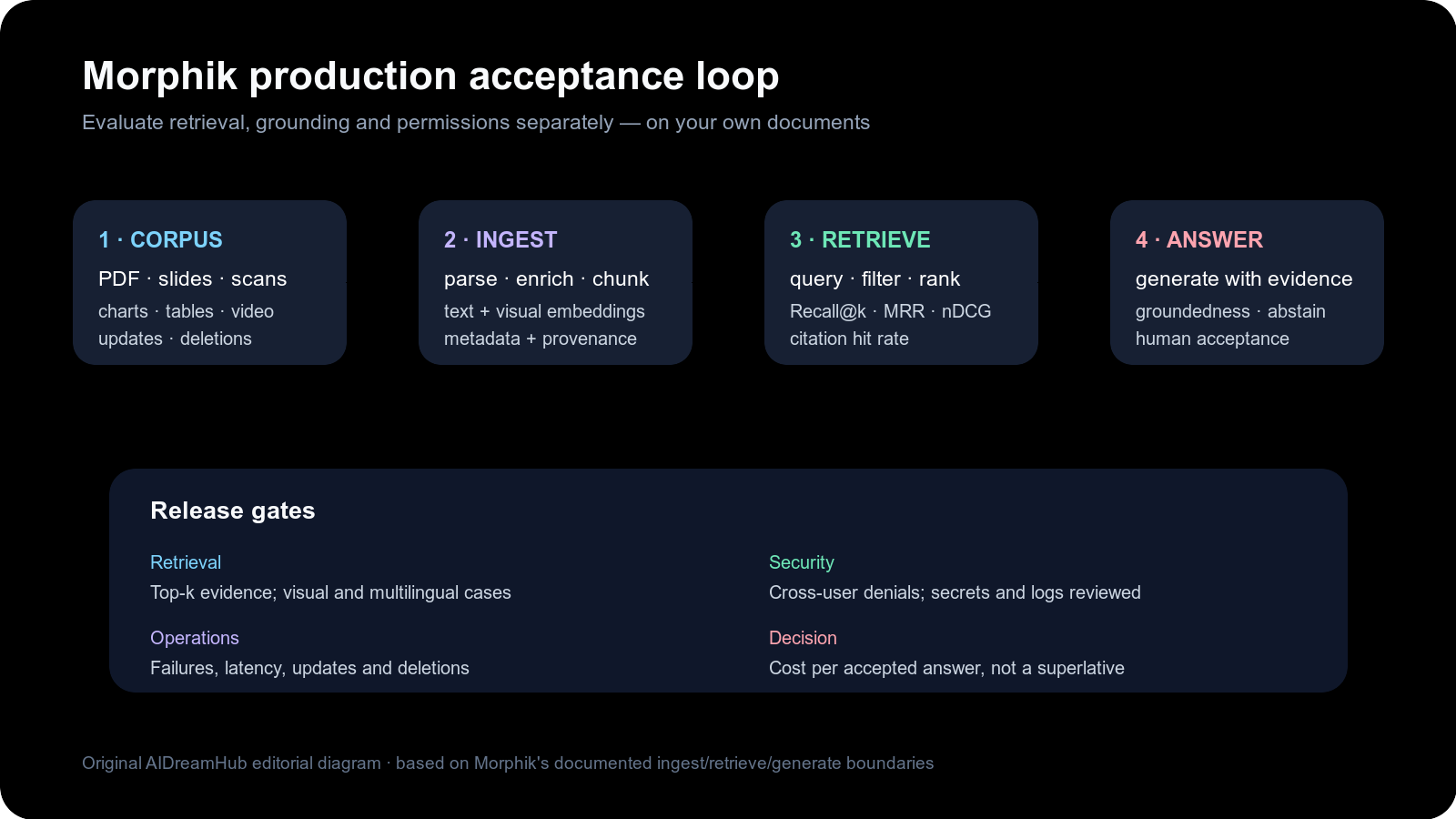
Morphik is a source-available multimodal document retrieval engine and hosted developer platform. This review separates Morphik Core from Morphik Cloud and the company’s newer healthcare AI-worker business.
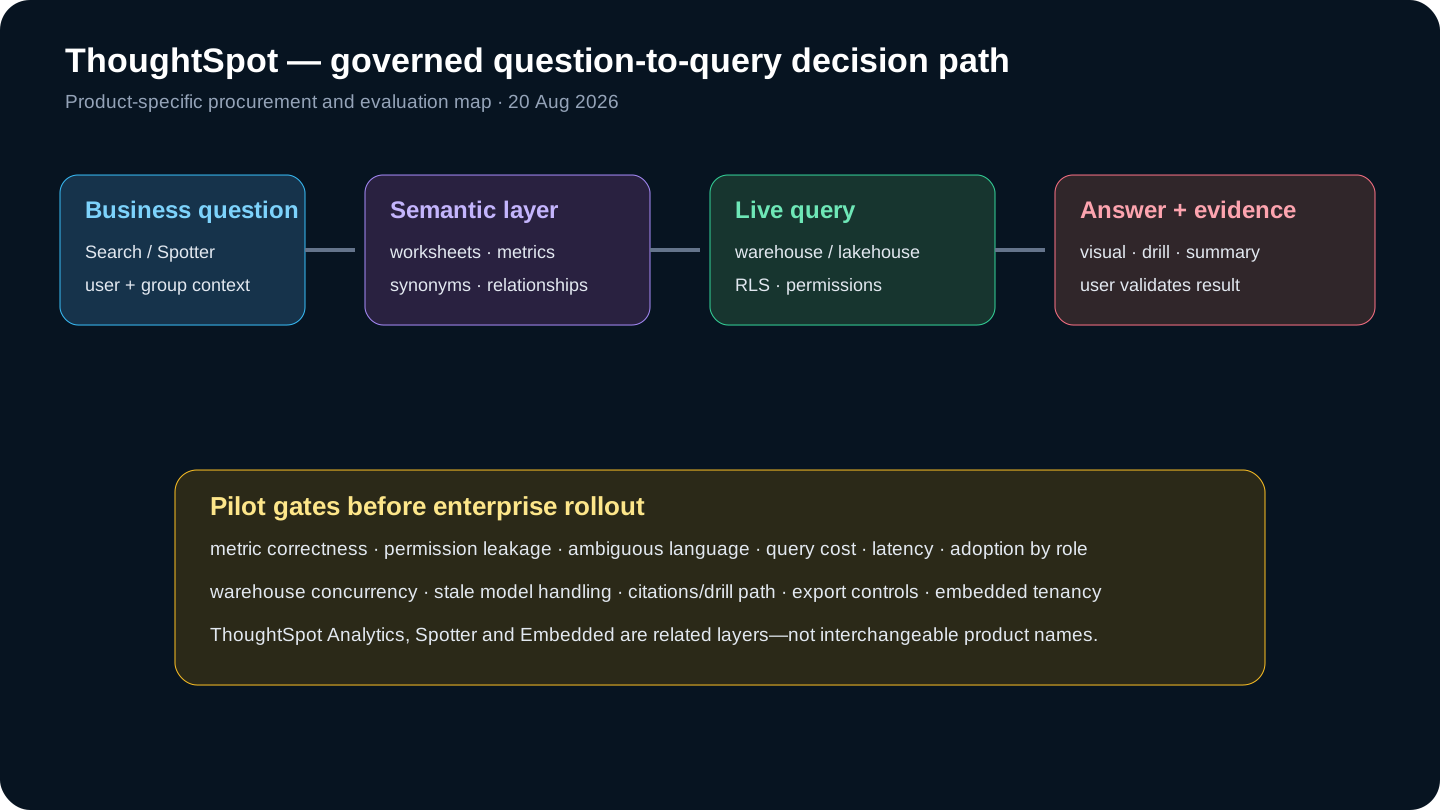
ThoughtSpot is an enterprise analytics platform for search, dashboards and governed conversational analysis. This independent review separates Analytics, Spotter and Embedded, then tests pricing, semantic quality, security and alternatives.