AnyGen
AnyGen is an AI workspace for creating and refining professional deliverables such as reports, documents, presentations, analysis, plans, and client-ready content.
AnyGenAI workspaceAI assistant
12000
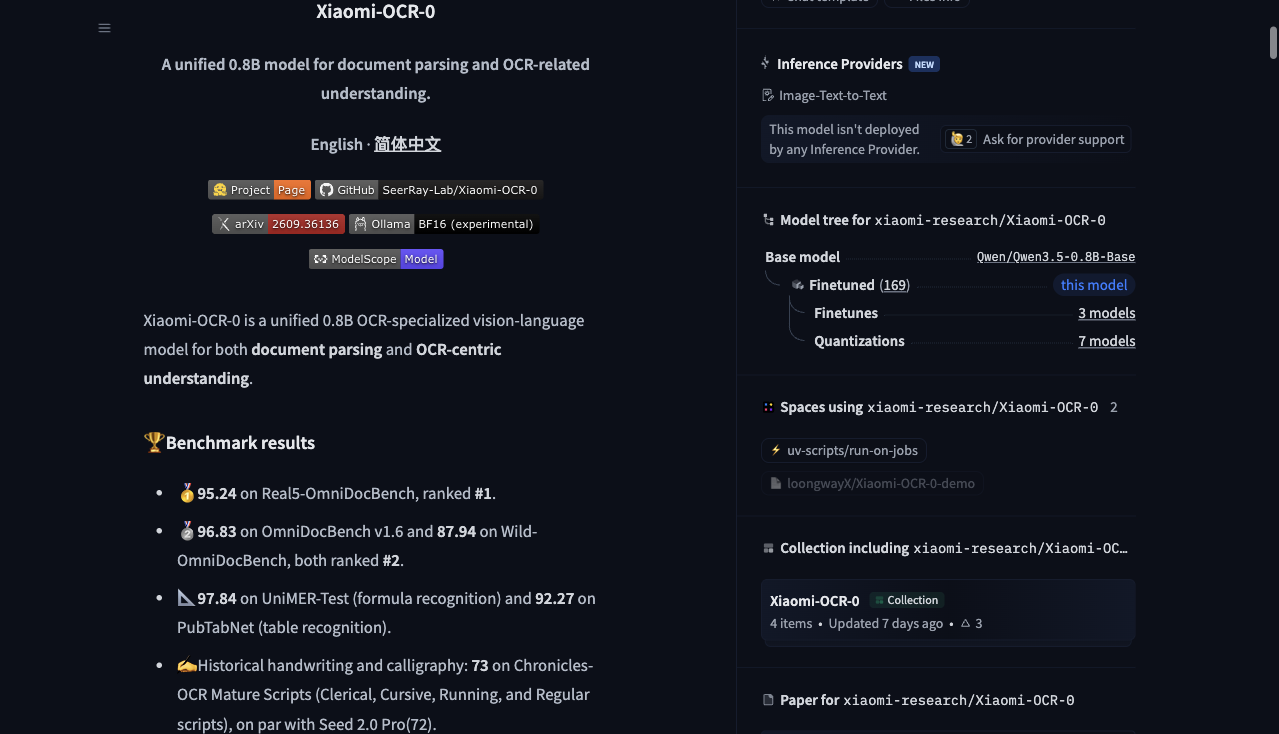

Xiaomi-OCR-0 is a 0.8B document vision-language model for parsing pages, tables and formulas, answering document questions and extracting structured fields.
0
Views
0
Likes
Nov 2026
Added
huggingface.co
Website
A quick visual look at Xiaomi-OCR-0 before you visit the official site.
Editorial Review
Research checked 6 November 2026. Publisher claims and third-party trials are identified separately; this page is not an AIDreamHub hands-on benchmark.
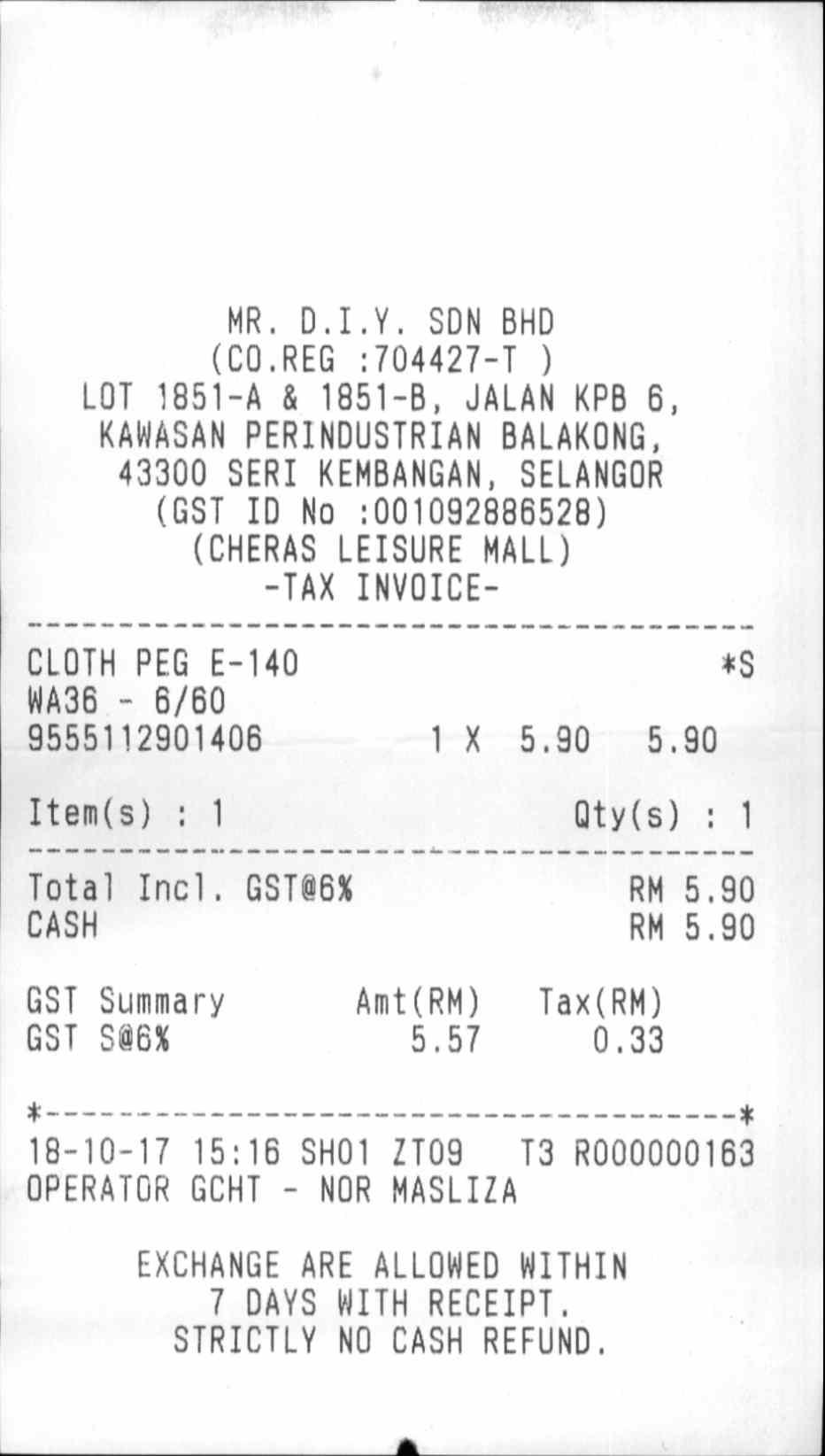
Xiaomi-OCR-0 is an OCR-specialised 0.8B vision-language model based on Qwen3.5-0.8B-Base. Its scope includes document parsing, OCR-oriented question answering and key-information extraction. That makes it a candidate component for a narrow document workflow: for example, extracting supplier, invoice date, currency and total from one family of receipts.
Do not confuse model output with validated accounting data. A deployment also needs image preparation, PDF handling, a field schema, deterministic checks, exception review and export. The practical opportunity is reducing correction work on a defined document type, not claiming that every photographed form becomes trustworthy CSV.
Official project page captured by AIDreamHub; not a locally run product.
The model card reports 96.83 on OmniDocBench v1.6, 95.24 on Real5-OmniDocBench and 87.94 on Wild-OmniDocBench. These are publisher-reported document-parsing scores, not invoice-field accuracy or percentages of fully correct pages. The technical report’s Real5 result uses PP-DocLayoutV3 for layout detection; page-only inference should not inherit that result without reproducing the pipeline.
The same published comparison gives PaddleOCR-VL-1.6 96.33, 93.19 and 87.36 respectively. These close numbers are useful research context, not proof of a meaningful lead on your receipts. We checked the model card, report and repository, but did not run an independent benchmark. Search coverage was dominated by launch summaries; a broad independent accuracy consensus was not established.
| Published comparison | OmniDocBench v1.6 | Real5 | Wild |
|---|---|---|---|
| Xiaomi-OCR-0 · 0.8B | 96.83 | 95.24 | 87.94 |
| PaddleOCR-VL-1.6 · 0.9B | 96.33 | 93.19 | 87.36 |
The official repository documents Python 3.10+ with a browser demo, MCP integration and separate inference backends. A compatible SGLang or vLLM server can provide the local model endpoint; experimental Ollama support uses a community BF16 package. The commands below are the documented Ollama/demo route, not a tested installation from this article.
Keep Ollama running, create an isolated Python environment and inspect requirements before installation. Open the demo at http://127.0.0.1:8787. Pulling the model alone does not apply the repository’s preprocessing and decoding choices; use its Demo or MCP integration. Region mode additionally requires PaddlePaddle, PaddleX and PP-DocLayoutV3. Whole-page parsing, KIE and VQA do not require that optional layout stack.
ollama pull longwayxu/xiaomi-ocr-0:bf16
git clone https://github.com/xiaomi-research/Xiaomi-OCR-0.git
cd Xiaomi-OCR-0
python3 -m venv .venv
source .venv/bin/activate
python -m pip install -r requirements.txt
export XIAOMI_OCR_BACKEND=ollama
export XIAOMI_OCR_MODEL=longwayxu/xiaomi-ocr-0:bf16
export XIAOMI_OCR_LOCAL_URL=http://127.0.0.1:11434/v1
python demo/server.py --port 8787Start with a redacted, representative image rather than a perfect promotional sample. Define an explicit schema before extraction: supplier, document_number, invoice_date, currency, subtotal, tax and total. Permit null for unreadable fields and forbid guessing. Keep the source image and raw response beside the normalised row so an operator can trace every correction.
For a proposed pilot, split examples by supplier or template into development and held-out sets. Include blurred totals, rotated captures, missing currencies, refunds and multi-page documents. Count field exact matches and fully correct rows separately. If nine fields are right and the total is wrong, a high average field score can conceal a failed business transaction.
Parse and validate JSON rather than importing whatever text the model returns. Preserve identifiers as strings, standardise dates only when unambiguous, and check arithmetic in currency minor units where applicable. Do not force subtotal plus tax to equal total without considering discounts, fees and rounding; route a mismatch for review.
Neutralise spreadsheet formula prefixes in untrusted string fields before CSV delivery. Keep raw output unchanged for audit, and export a separately sanitised version. This safety step is independent of OCR accuracy. For a production decision, record correction minutes per accepted row as well as latency and the fraction sent to a human.
| Field or stage | Suggested check | Failure path |
|---|---|---|
| Document number | String; preserve leading zeros | Human comparison with source |
| Date and currency | Explicit format and unambiguous currency | Leave null or request review |
| Monetary values | Decimal precision and reconciled totals | Flag discrepancy; do not invent a fix |
| CSV strings | Escape formula-triggering prefixes | Keep raw and safe export separately |
Compare Xiaomi-OCR-0 with PaddleOCR-VL for layout-heavy document parsing and with a conventional OCR-plus-rules pipeline for a stable form. Add a stronger vision-language model when interpretation across unusual documents matters more than a compact local footprint. These are workflow alternatives, not an independently measured quality ranking.
Use the same held-out images, field schema and acceptance rules for every route. A small model is attractive only if its memory, operational cost and correction burden work on the actual hardware. A 0.8B parameter count does not specify end-to-end RAM, page latency or support for every quantised runtime.
| Route | Reason to compare | Main acceptance question |
|---|---|---|
| Xiaomi-OCR-0 | Compact parsing plus structured extraction | Are complete rows correct after validation? |
| PaddleOCR-VL | Document-layout-oriented pipeline | Does layout handling reduce missed content? |
| OCR + fixed rules | Stable, tightly controlled forms | Do template changes break extraction? |
The checkpoint is labelled Apache-2.0, but runtime packages and additional components retain their own terms. Download dependencies and weights before expecting offline operation. A local model does not make a remotely hosted demo private; confirm where images, logs and temporary PDFs go.
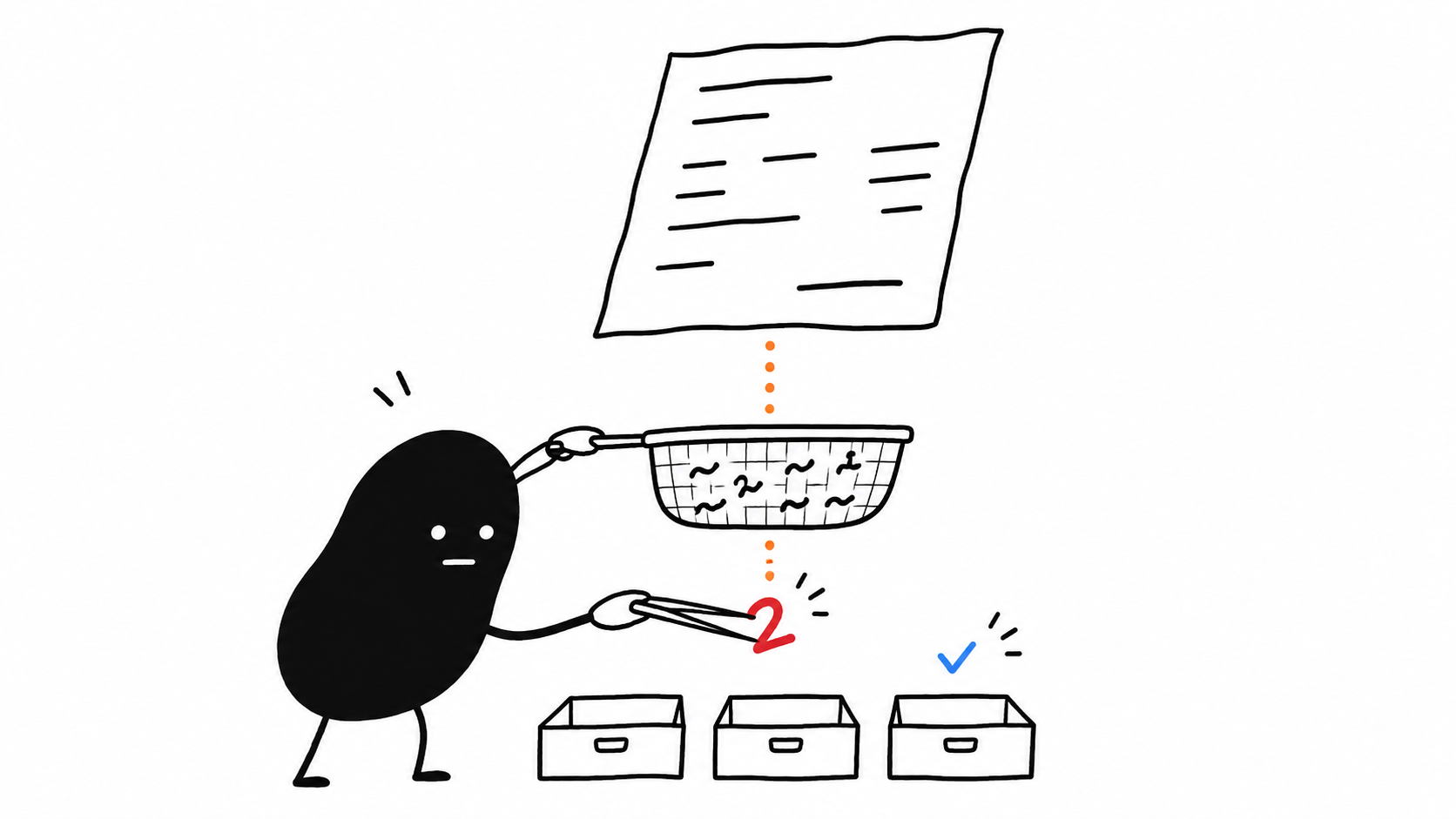
The repository calls Ollama support experimental and limits its alignment evidence to seven samples, not general benchmark parity. A model-card-linked community GGUF page was unavailable during this review, so this article does not recommend that link. Prefer the current official integration instructions and record exact model, projector and runtime revisions. The receipt illustration is a workflow metaphor, not a successful extraction we generated.
It can produce text or structured fields, but a usable CSV workflow needs schema validation, date/currency handling, reconciliation, spreadsheet-safe strings and exception review. Preserve the image and raw response. Judge complete accepted rows rather than treating a valid JSON object as a correct record.
No. The original checkpoint’s benchmark and the repository’s limited Ollama alignment checks do not establish general parity for community conversions. Image preprocessing, the vision projector, runtime version and decoding settings matter. Re-evaluate the exact package on your own held-out documents.
The parameter count is not a universal hardware guarantee. Backend compatibility, image processing, context and optional layout models add requirements. Download the required files in advance and confirm the chosen backend on your OS. The official instructions distinguish compatible GPU servers from experimental local Ollama use.
Visit the official website to get started
Have an AI tool to share?
Get your product in front of people actively exploring AI tools.
Submit Your ToolAnyGen is an AI workspace for creating and refining professional deliverables such as reports, documents, presentations, analysis, plans, and client-ready content.
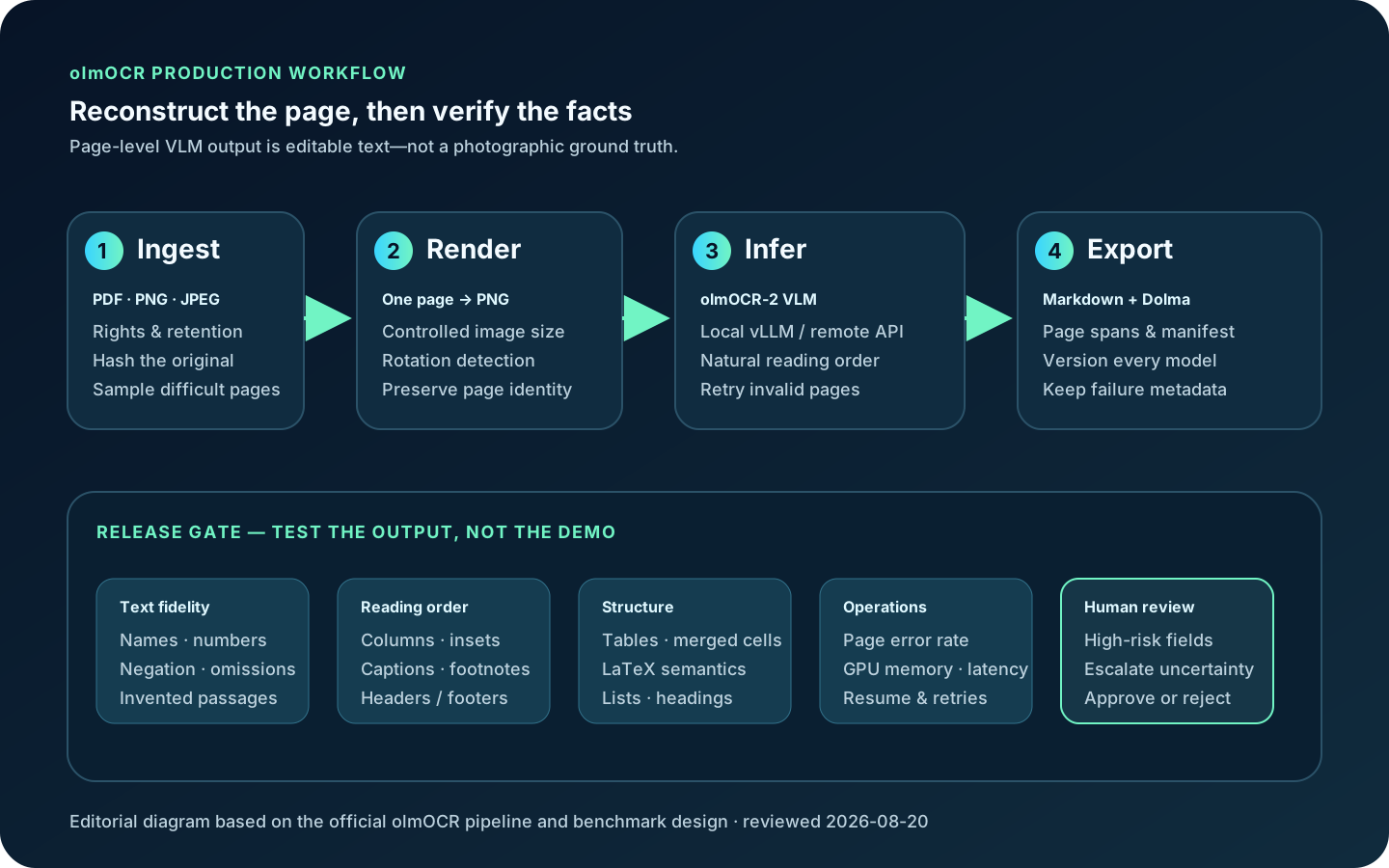
olmOCR is AI2’s open-source GPU document-reconstruction toolkit for turning PDF, PNG and JPEG pages into naturally ordered Markdown or text with tables and equations.
Gamma is an AI-assisted workspace for creating editable presentations, documents, webpages, social posts and graphics. This independent guide covers creation modes, current plan boundaries, imports and exports, brand and accessibility QA, fact-checking, site publishing, privacy and alternatives.

Offer Bull is an AI mock-interview and answer-coaching app. This independent review exposes a material marketing-versus-terms conflict, then tests privacy, pricing, accuracy and safer alternatives.