What Omogle actually does
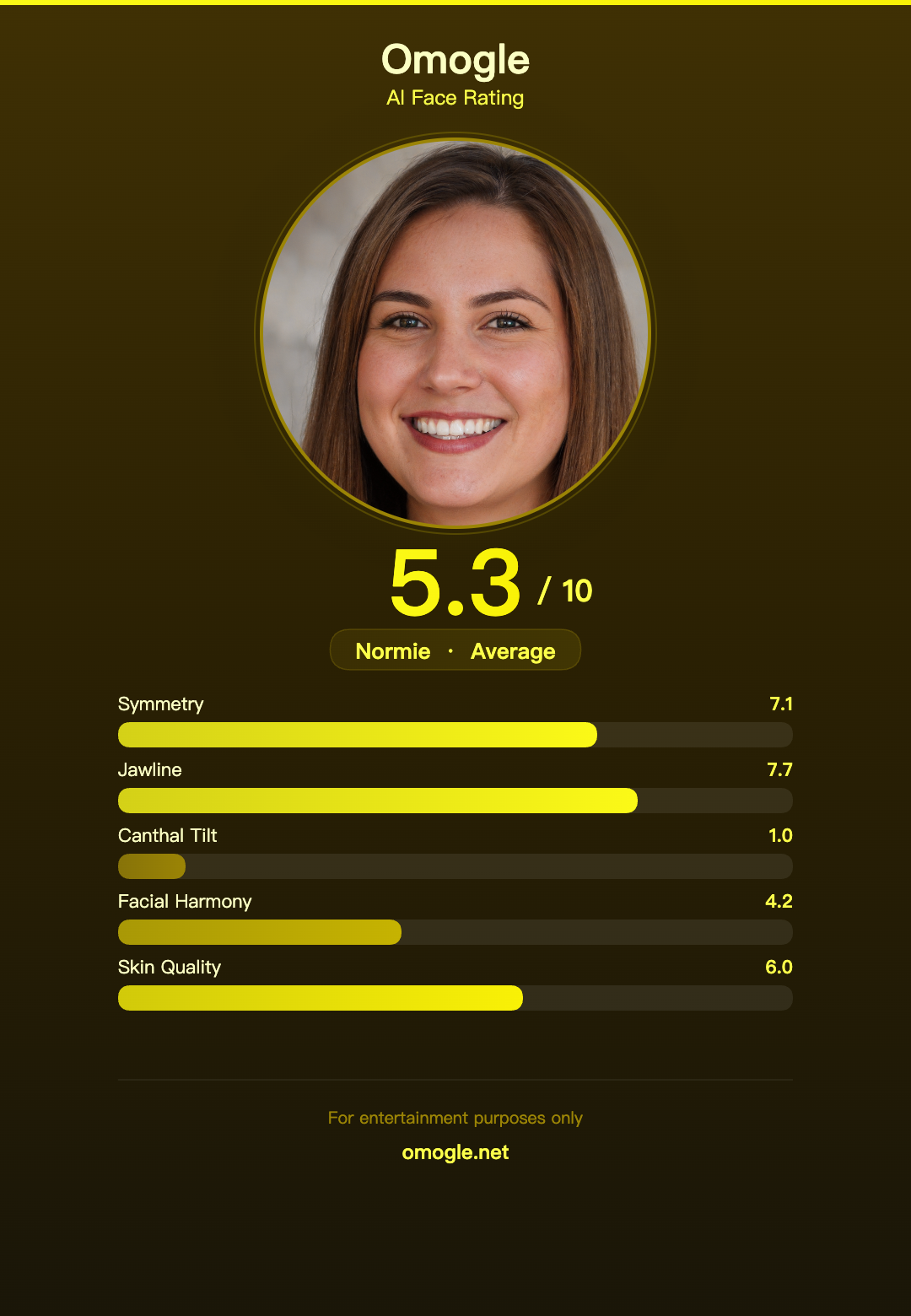
Omogle is a free, browser-based face-rating experience at omogle.net. A user uploads a photo and receives a PSL-style score plus observations about facial proportions and landmarks. The site describes the result as entertainment, not a clinical assessment or an objective measurement of beauty. It should not be confused with similarly named live video-chat or “mog battle” sites.
How the experience works
- Choose a clear, front-facing photo in the browser.
- The page detects facial landmarks and calculates several appearance-related signals.
- It displays a score and an explanatory breakdown.
- Use the output as a novelty or prompt for photography/grooming ideas—not as a factual judgment about identity, health, age, ethnicity, or personal worth.
Who might use it—and who should avoid it
It may appeal to adults curious about face-analysis trends, profile-photo presentation, or “looksmax” internet culture. It is a poor fit for children, hiring, dating eligibility, identity verification, medical decisions, mental-health assessment, or any high-stakes judgment. People who experience body-image anxiety or compulsive appearance checking should avoid repeated scoring.
Privacy and bias checks
Omogle says analysis runs client-side and that uploaded photos do not leave the device. That claim is helpful but should still be checked against the current privacy policy and browser network behavior before using a sensitive image. Do not upload another person's photo without permission. Facial scoring systems can also reflect dataset, lighting, camera, pose, skin-tone, age, gender-presentation, and cultural biases; changing the photo can change the result substantially.
What is verified and what remains a claim
- Visible product behavior: the site presents a browser upload flow, a 1–10 PSL-style result, sub-scores, and an entertainment disclaimer.
- Vendor claim: Omogle says face analysis uses face-api.js/JavaScript in the browser and that the photo is not uploaded or stored.
- Not independently verified here: the implementation, network requests, cookies, analytics, model files, retention behavior, bias, and security have not been audited by AI Dreamhub.
- Practical check: privacy-sensitive users should inspect browser network activity and current site terms, avoid identifiable or third-party photos, and assume screenshots or local browser extensions can still expose the result.
The site's separate Privacy link currently redirects to its homepage rather than providing a stable standalone policy. For that reason, this listing reports the client-side-processing statement as a vendor claim, not as a verified privacy guarantee.
Limitations
- Attractiveness is subjective and culturally dependent; a numerical score is not ground truth.
- Lighting, lens distortion, expression, makeup, pose, cropping, and image quality affect landmark analysis.
- A model cannot evaluate character, compatibility, confidence, health, or real-world presence.
- The tool's own technical and privacy claims have not been independently audited for this listing.
Alternatives
For profile-photo selection, prefer feedback tools that compare clarity, expression, and context without assigning a beauty score. For facial landmarks in a developer project, use documented libraries such as MediaPipe under appropriate consent and privacy controls. For body-image concerns, an AI rating tool is not an appropriate support resource.
FAQ
Is an Omogle score accurate?
It may be repeatable under similar photo conditions, but it is not an objective attractiveness measurement. Treat it as entertainment shaped by the selected image and model assumptions.
Does Omogle store uploaded photos?
The site says processing occurs in the browser and photos are not uploaded. Users should verify the current privacy policy and avoid sensitive or non-consensual images.
Is Omogle the same as Omoggle?
No. Several similarly named sites exist. This listing points to omogle.net, a single-photo rating tool, not a random live video-chat battle service.
Sources reviewed