About
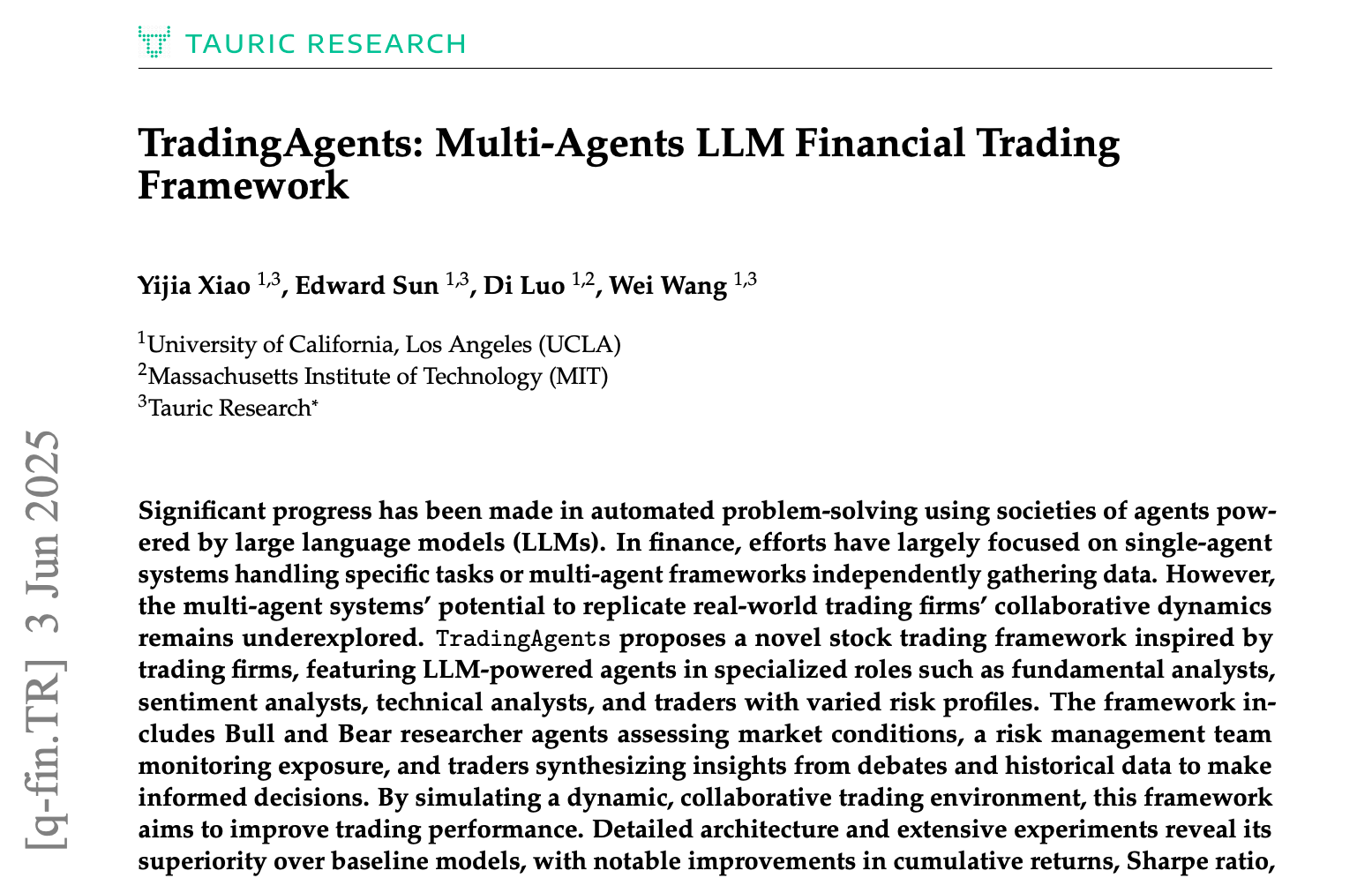
TradingAgents mirrors the structure of a trading firm by splitting work across specialized agents instead of pushing every decision through one assistant. The framework combines analyst roles, debate-style researchers, a trader, and portfolio oversight so teams can test how agent collaboration changes financial research and simulated decision making.
Key Features
- Covers analyst, researcher, trader, and portfolio-management roles in one graph.
- Supports multiple providers including OpenAI, Anthropic, DeepSeek, Qwen, Gemini, and local Ollama paths.
- Recent releases added grounded sentiment analysis, structured outputs, checkpoint resume, and broader provider coverage.
Use Cases
- Research labs exploring multi-agent coordination in finance.
- Teams prototyping market-analysis workflows before building proprietary systems.
- Developers who want an inspectable open-source base for simulated trading decisions and backtests.
Community Comment
The GitHub response is exactly what you would expect from a fast-rising finance repo: excitement around the real-world desk metaphor, lots of attention on provider coverage, and repeated reminders that research tooling is not the same thing as deployable trading advice. That caution is actually a strength here, because the maintainers are pretty direct about the gap between interesting experiments and reliable capital allocation.
Limits and Risks
This project is built for research, experimentation, and simulation. Results will move with model choice, data quality, and prompt design, and none of that removes market risk. Teams also need to budget for API costs and external data dependencies if they want to move beyond toy runs.
Alternatives
Comparable options include proprietary quant stacks, custom LangGraph financial workflows, single-agent research bots, and internal analytics pipelines built around market data APIs.
FAQ
- Is TradingAgents for live trading? The maintainers explicitly frame it as research tooling rather than financial advice or a guaranteed production trading system.
- Who gets the most value from it? Developers and research teams that want to study agent collaboration in finance and iterate on open-source workflows.