About
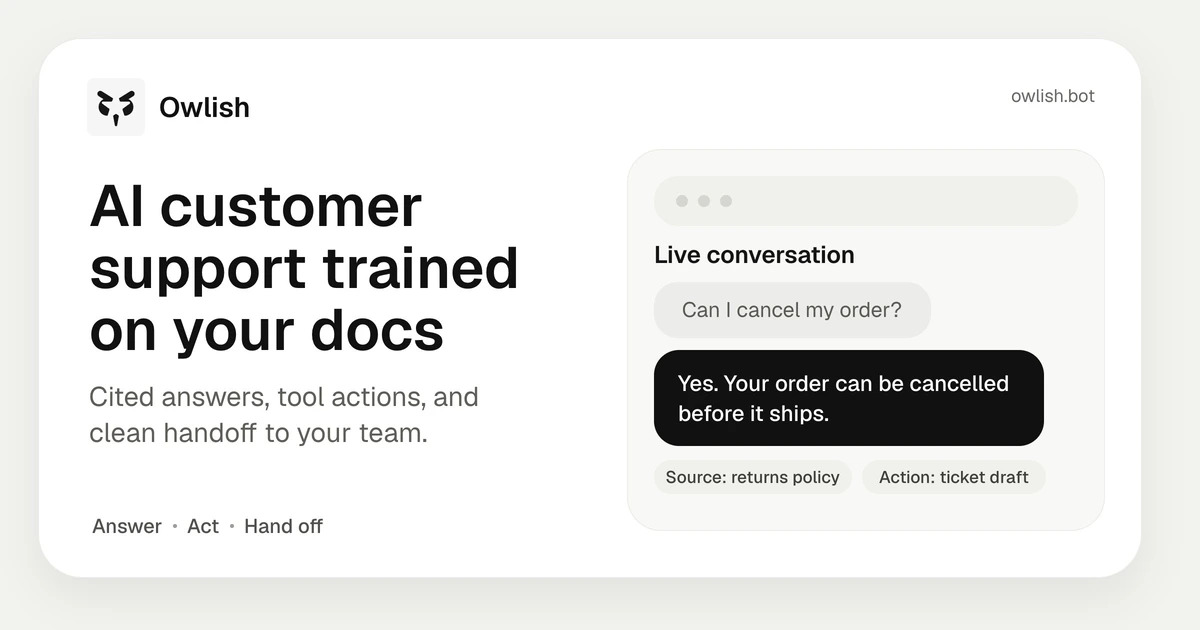
Owlish is positioned less as a generic chatbot builder and more as a support-operations layer. It ingests help centers and knowledge sources, deploys support agents across several channels, and tries to close the loop with queues, approved replies, analytics, and escalation instead of stopping at one AI answer bubble.
Why It Is Hot Now
Its recent launch landed because support teams do not just want another chat widget anymore. The stronger pitch is operational: AI that can answer with sources, move across channels, and know when a human should take over.
Key Features
- Deploys support agents to web, Slack, Teams, Google Chat, WhatsApp, and other channels.
- Supports citations, approved direct replies, API access, and MCP integration.
- Frames customer support as a full workflow with review, handoff, and improvement loops.
Real Use Cases
- Answering repetitive support questions from existing docs and policy content.
- Extending support coverage outside business hours without losing human escalation paths.
- Giving support teams a shared inbox and analytics layer around AI-assisted resolution.
Community Pulse
The strongest public feedback goes straight to the hard part: handoff timing. People like the idea of source-grounded support agents, but they know the difference between a helpful support agent and an annoying one often comes down to whether it escalates too early, too late, or with enough context.
Limits and Risks
Support automation lives or dies on knowledge freshness, escalation logic, and brand-safe replies. Teams still need to watch hallucinations, stale policy content, multilingual coverage, and whether the agent can do more than deflect tickets politely.
Alternatives
Comparable options include Intercom Fin, Zendesk AI agents, custom RAG support bots, and broader helpdesk copilots that attach AI onto existing ticketing systems.
FAQ
- Who should test Owlish first? Support teams with solid documentation that want to reduce repetitive volume without removing human escalation.
- What should be reviewed before rollout? Source freshness, escalation thresholds, approved replies, and reporting around unresolved conversations.