ElevenLabsAI voice generatortext to speechvoice cloningvoice agentsspeech to textdubbinggenerative audioEleven v3
Product Preview
A quick visual look at ElevenLabs before you visit the official site.
Published 1/21/2026
Editorial Review
About ElevenLabs
Overview
ElevenLabs has grown from a creator-focused AI voice generator into a broader voice AI infrastructure platform. The official site still emphasizes lifelike speech, 5,000+ voices, 70+ languages, APIs, and SDKs, while current documentation covers text-to-speech, speech-to-text, voice cloning, conversational agents, and generative audio.
Search intent and best fit
The strongest search intent is commercial investigation: creators want realistic voiceovers, developers want a voice API, and support or sales teams want voice agents. The page should also answer risk-aware questions about cloning consent, multilingual quality, latency, and whether ElevenLabs is better than cloud TTS providers.
Key features
Text-to-speech and voice design for narration, character voices, ads, courses, and apps.
Voice library and cloning workflows, including premade voices and custom voices from recordings.
Conversational agents and real-time audio use cases for support, sales, tutoring, and interactive products.
Developer surface through REST API plus official Python and TypeScript SDKs.
Model choices such as expressive multilingual generation and low-latency options for interactive experiences.
Real use cases
Generate multilingual narration for YouTube videos, product demos, podcasts, audiobooks, and e-learning.
Prototype a voice agent that answers support questions or routes calls with an LLM backend.
Localize a video by combining dubbing, translated scripts, and cloned or brand-approved voices.
Create game NPC dialogue, character reads, or accessibility audio for an app.
Use speech-to-text and TTS together for a voice interface, then tune latency and interruption behavior.
Recommended workflow
Choose whether the job is studio voiceover, real-time agent, dubbing, sound design, or API integration.
Select a voice, model, language, stability/similarity settings, and sample script before generating long content.
For cloned or marketplace voices, confirm consent, licensing, attribution, and commercial-use rights.
Run pronunciation and emotion passes; synthetic voices often need script edits, pauses, and regeneration for natural delivery.
For production APIs, monitor cost, latency, moderation, privacy, logging, and fallback behavior.
Strengths and limitations
Excellent for realistic voice generation and developer-friendly voice AI, especially when speed to production matters.
Voice cloning is sensitive: users need consent, rights, disclosure, and abuse-prevention review.
Quality varies by language, voice, script style, model, and latency target.
For enterprise telephony or compliance-heavy workloads, compare data handling, region, uptime, and support with Azure, Google, Amazon, OpenAI, or specialist contact-center platforms.
Alternatives
OpenAI audio models for developer API workflows and multimodal integration.
PlayHT and Resemble AI for voice cloning and commercial voice libraries.
Azure Speech, Google Cloud TTS, and Amazon Polly for enterprise cloud integration.
Hailuo/MiniMax Audio for multilingual AI voice generation alternatives.
Piper, Coqui, or local TTS stacks when offline/open-source deployment matters.
Media and examples
The screenshot uses ElevenLabs official cover media; additional official docs media show voice library and agent integration examples.
FAQ
What is ElevenLabs best for?
ElevenLabs is best for realistic AI voiceovers, multilingual TTS, voice cloning, dubbing, and voice-agent prototypes or production APIs. It is strongest when voice quality and fast iteration matter.
Does ElevenLabs support many languages?
Official materials describe 70+ languages for current expressive models, while help content lists detailed language coverage. Exact availability depends on the model and product surface selected.
Can I clone any voice with ElevenLabs?
Technically the platform supports voice cloning, but users must have permission and the right to use the voice. Commercial projects should review consent, licensing, disclosure, and platform rules before publishing.
IndexTTS is Bilibili’s open-source industrial-grade controllable and efficient zero-shot text-to-speech system. It is best for speech researchers and developers who need controllable TTS experiments, not for casual users looking for a polished web voice app.
Index TTStext to speechzero-shot TTS
5940
Azure Text to Speech
The best and most realistic voice tools currently available
text-to-speech
3990
Hailuo AI TTS
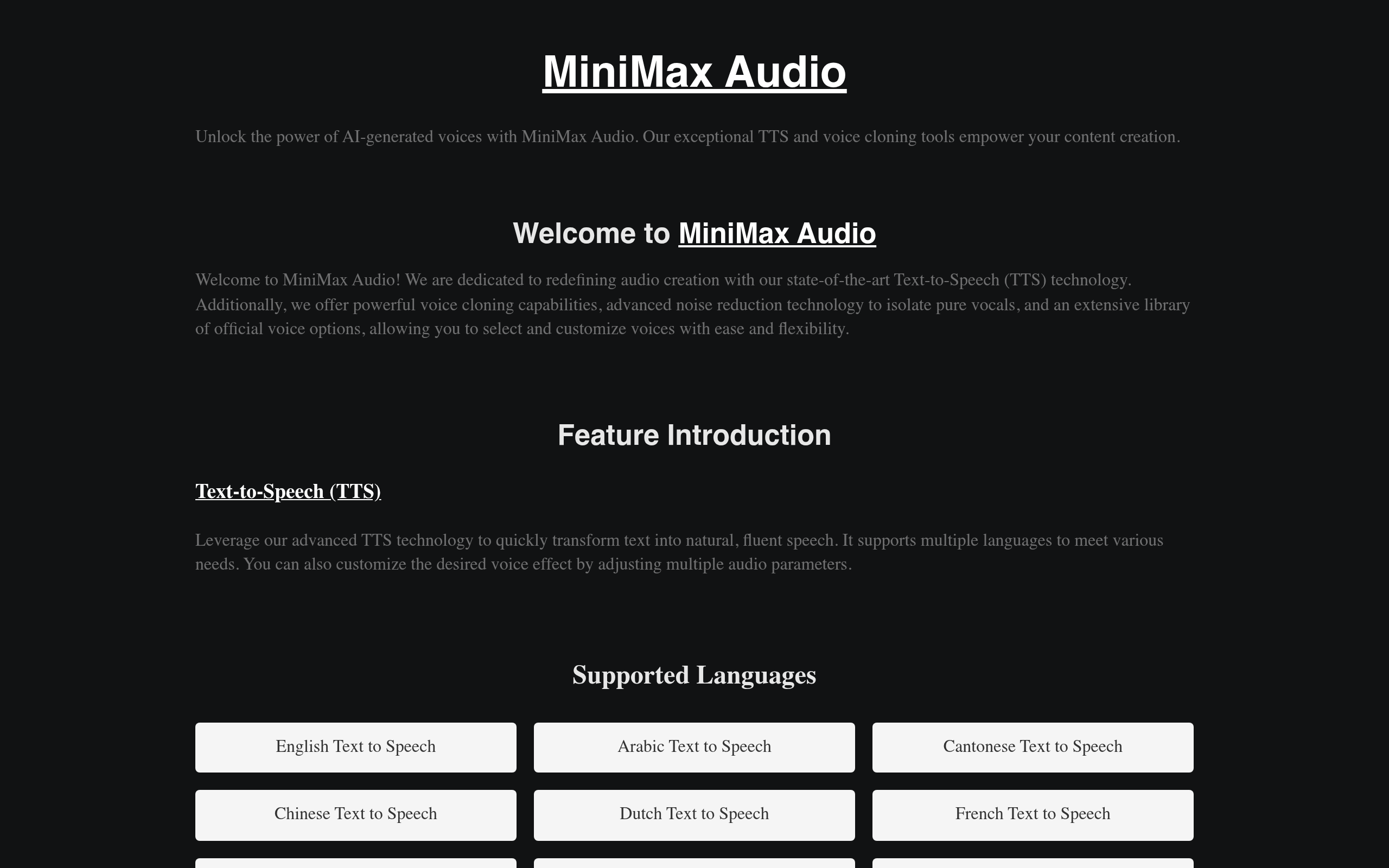
Hailuo AI TTS, also tied to MiniMax Audio, is a text-to-speech and voice-generation product for multilingual AI voices, voice cloning, and audio content workflows.
Hailuo AI TTSMiniMax Audiotext to speech
10460
Coqui TTS
A deep learning toolkit for Text-to-Speech, battle-tested in research and production