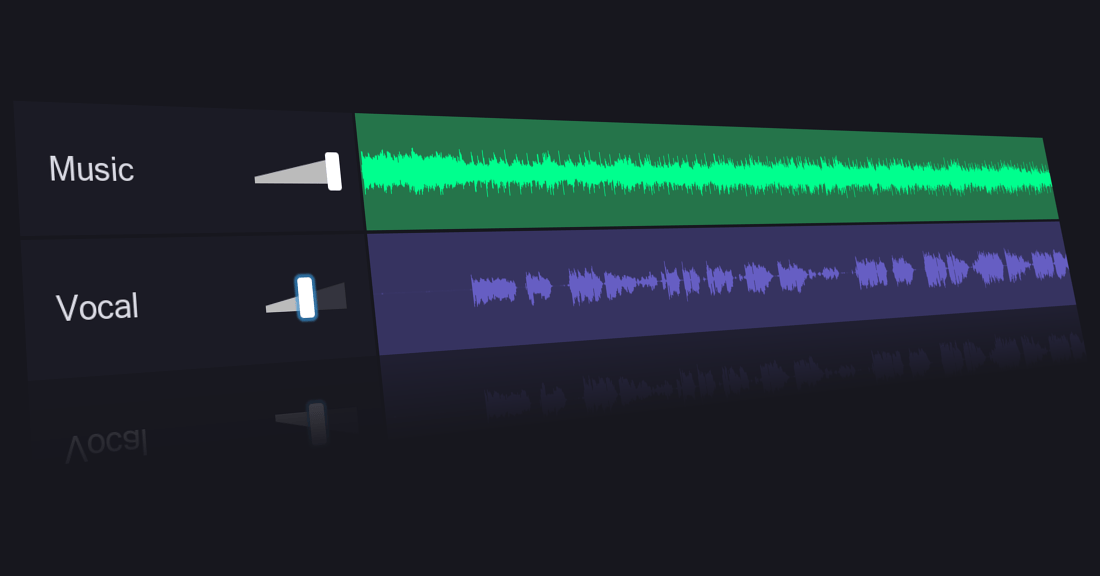
So-VITS-SVC is a research framework for singing voice conversion (SVC): it takes an existing vocal performance and renders its linguistic content and melody with a trained target timbre. It is not text-to-speech, does not ship with a voice model and cannot legally or ethically supply rights to a performer’s identity, source song or training recordings.
The original svc-develop-team/so-vits-svc repository was archived in November 2023 and is read-only. Its 4.1-Stable branch remains widely referenced, but adoption now means pinning old dependencies, validating third-party checkpoints and taking full responsibility for maintenance. The README describes academic use, emphasizes fictional-character intent, requires users to resolve dataset authorization and sets additional publication/disclosure terms. Read the repository’s exact README and license together before using it.
SVC is not TTS, a vocoder or source separation
| Technology | Input | Output | What it does not provide |
|---|---|---|---|
| So-VITS-SVC | Sung/spoken source audio + trained target model | Same performance rendered toward target timbre | Lyrics-to-performance generation or usage rights |
| Text-to-speech | Text + voice/style conditioning | New spoken waveform | Faithful transfer of an existing sung performance |
| Singing synthesis | Lyrics, notes and expression controls | New sung performance | Automatic legal permission to imitate a singer |
| Vocoder | Acoustic representation | Waveform | Content/timbre conversion policy |
| Source separation | Mixed song | Estimated vocal/instrumental stems | Clean original multitracks or voice conversion |
The full pipeline and where artifacts enter
 consented target recordings
          |
          v
 clean -> segment -> resample -> content features + F0
          |                           |
          '----------- training ------'
                         |
                         v
                 target voice model
                         |
 source vocal -> F0/content extraction -> generator -> optional diffusion
                         |                    |
                         '------ render ------'
                                      |
                              human audio + rights QA
Content encoders try to represent phonetic information while suppressing source identity. F0 carries pitch; the generator and vocoder reconstruct audio in the target timbre. Imperfect disentanglement creates “timbre leakage,” where the source singer remains audible. Bad separation adds instruments and reverb to training data; inconsistent pitch extraction produces octave jumps; clipping and mismatched sample rates become metallic artifacts.
Rights gate before any download or training
A technically public recording is not automatically a lawful training dataset. Obtain documented permission from the identifiable voice performer and rights holders for the intended training, model storage, collaborators, territories, commercial status and output distribution. Separately license the composition, lyrics, master/source vocal and backing track used in a released cover.
| Asset or right | Evidence to retain | Common mistaken assumption |
|---|---|---|
| Target voice recordings | Performer consent and recording/master rights | “Available online” means trainable |
| Voice identity/persona | Scope, duration, revocation and allowed contexts | A software license grants likeness rights |
| Source vocal | Recording permission and tool-compatible terms | A separated stem becomes yours |
| Song/lyrics | Composition/mechanical/sync permissions as applicable | A cover eliminates publishing rights |
| Model/checkpoint | Provenance, license, dataset statement and checksum | A download page proves authorized data |
| Final release | Platform policy review, disclosure and credits | “AI generated” is a complete legal defense |
Do not create deceptive impersonation, fraud, harassment, sexual content or political messaging in another person’s recognizable voice. For a fictional-character project, confirm that character and original performance rights are also cleared. Where consent is withdrawn, have a practical model deletion and distribution-takedown process.
Dataset design: quality beats indiscriminate duration
Use clean, dry, isolated recordings from the consenting target. Remove instrument bleed, heavy room reverb, doubled vocals, extreme effects, clipping, long silence and other speakers. Preserve expressive variety that matches the intended output—pitch range, vowels, consonants, registers and dynamics—without mixing incompatible recording chains blindly.
Split by contiguous source session or song, not random adjacent clips, so validation does not contain near-duplicates from training. Keep a locked test set that is never used for tuning. Maintain a manifest with file hash, origin, consent record, sample rate, duration, preprocessing steps, transcript/lyrics if available and exclusion reason.
| Dataset check | Pass signal | Fix |
|---|---|---|
| Isolation | No audible accompaniment or backing singer | Use original stems or discard; separation is imperfect |
| Level | No clipping; consistent usable signal | Normalize carefully, never repair severe clipping by guess |
| Identity | One authorized target per speaker label | Remove collaborators and crowd responses |
| Pitch coverage | Matches intended singing range | Record consented missing registers |
| Validation independence | Different sessions/phrases from training | Re-split before measuring |
| Provenance | Every clip maps to a permission record | Quarantine unattributed files |
Version and dependency reality
The 4.1-Stable README reports Python 3.8.9 as its tested stable version and requires separate pretrained encoders/vocoder assets. In 2026, this is a legacy environment. Build it in an isolated container or virtual machine, pin hashes, scan dependencies and deny unneeded network access. Do not weaken a modern workstation globally to satisfy old CUDA or Python packages.
Third-party forks, notebooks, GUIs and model packs are separate projects. They may change code, licensing, telemetry or default downloads. Verify upstream ancestry, commit, installer contents and model provenance. Never load untrusted PyTorch checkpoints on a machine containing secrets: legacy serialization formats can execute code during loading.
Content encoder, F0 and retrieval choices
4.1 documents multiple speech encoders, with ContentVec variants among the common choices. Encoder dimensions and configuration must match the checkpoint; 4.0 compatibility may require adding the correct speech_encoder field. Models and preprocessed assets from different branches are not universally interchangeable.
For singing, preserve the source melody using a robust F0 extractor and validate octave behavior. The README warns that automatic F0 prediction can cause substantial pitch shift for singing and should generally not be enabled there. Feature retrieval or clustering can reduce source timbre leakage and sometimes improve articulation, but a high mix ratio may copy dataset artifacts and slow inference. Treat the documented 0.5 example as a starting point, not a universal optimum.
| Control | Listen for | Bad-setting symptom |
|---|---|---|
| F0 extractor | Stable melody, vibrato and voiced/unvoiced transitions | Octave jumps, robotic pitch or lost consonants |
| Pitch shift | Comfortable target range without formant collapse | Chipmunk/booming tone and unstable highs |
| Retrieval/cluster ratio | Target similarity without memorized artifacts | Buzzing, copied noise or reduced intelligibility |
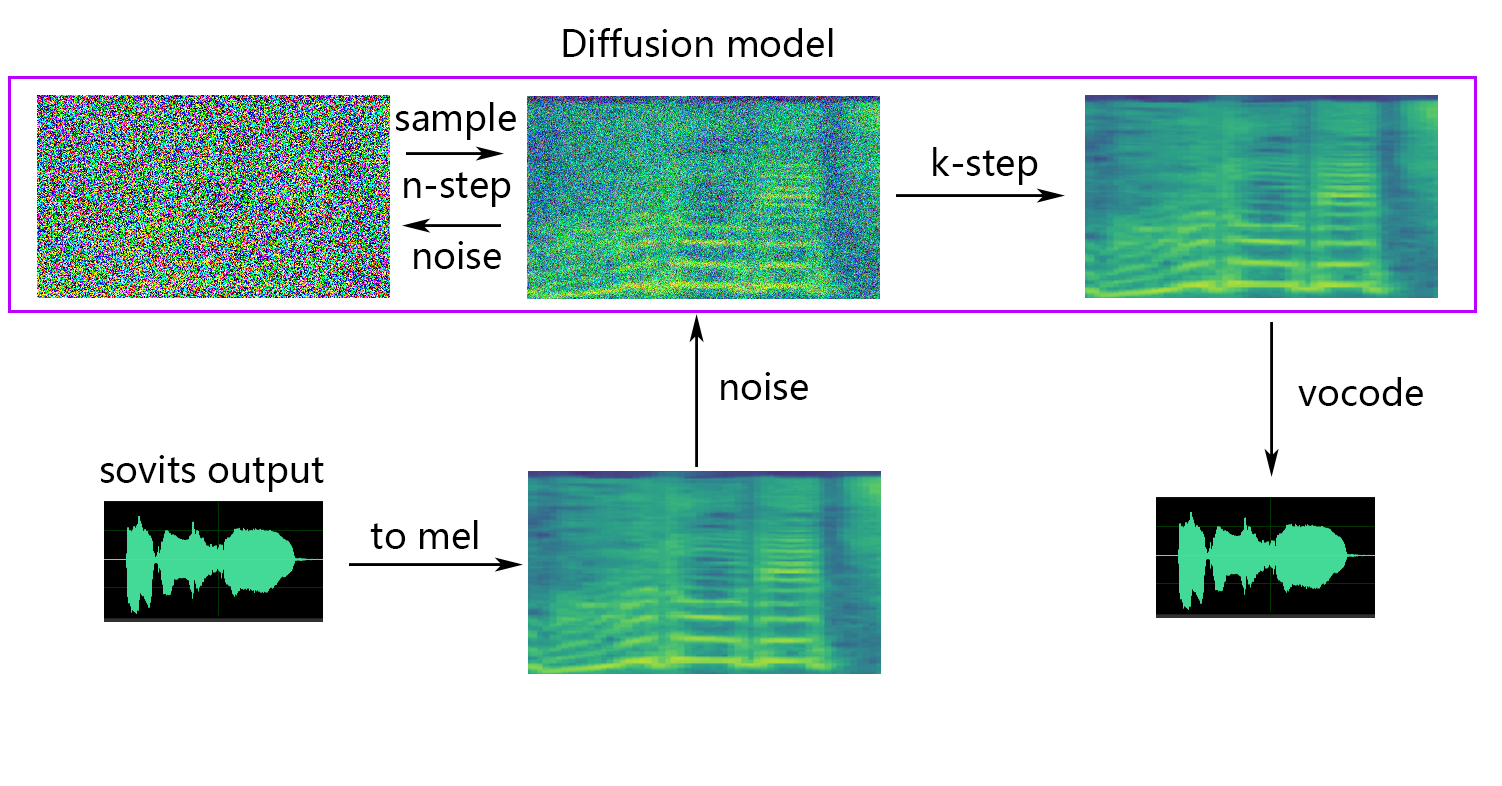
| Shallow diffusion | Smoother detail without over-processing | Blurred transients and extra compute |
| Noise scale / slicing | Natural texture and phrase continuity | Breath noise, seams or inconsistent tone |
Training without chasing a single loss value
Start with a small configuration and an auditable baseline. Save configuration, seed, code commit, dependency lock, GPU, preprocessing manifest and checkpoint hash. Periodically render the same consented validation phrases. Training loss can fall while perceived naturalness, intelligibility or target similarity stagnates or degrades.
Stop based on blinded validation and artifact rates, not a community-recommended step count. Keep training and publishable inference checkpoints separate. The repository describes model compression that removes training-only data and can substantially reduce final size; preserve the original checkpoint only in controlled storage if continued training is authorized.
Evaluation: three qualities, not one “sounds good” score
| Dimension | Human test | Supporting metric |
|---|---|---|
| Naturalness | Blind MOS rating on unseen phrases | Artifact counts by type and duration |
| Target similarity | Consent-aware A/B judgment against target | Speaker embedding similarity, never used alone |
| Content accuracy | Transcribe lyrics and critical words | Phoneme/word error where appropriate |
| Pitch fidelity | Musician checks melody and expressive intent | F0 correlation, RMSE and voiced error |
| Source leakage | Can listeners still identify source singer? | Compare source/target embedding tendency |
| Operational cost | Time from clean input to accepted stem | Real-time factor, VRAM and correction minutes |
Use multiple source singers and songs outside the training set. Include high notes, low notes, breathy sections, fast lyrics, vibrato and silence. Randomize samples and hide system names from raters. Report confidence intervals and rejected outputs, not only the best demo.
Post-production and disclosure
Inspect the converted vocal solo before mixing. Repair only localized artifacts, align timing where preprocessing introduced drift, control sibilance and breaths, then mix against a lawfully obtained instrumental. Do not use heavy effects to hide model failure in evaluation.
The project’s terms request clear attribution of the input source vocal/audio for platform uploads. Beyond that minimum, label the result as AI voice conversion, identify the authorized voice/model owner when agreed, credit song and source rights, and describe meaningful editing. Preserve a private production sheet linking model hash, source, settings, consents and final master.
Security and distribution controls
- Store training data and checkpoints encrypted with role-based access.
- Publish checksums and a model card; do not distribute raw training clips.
- Restrict a released model’s use through contract and access control; a text license alone cannot prevent copying.
- Test checkpoints in a disposable, network-restricted environment before loading.
- Define incident response for impersonation, leaked models and consent withdrawal.
- Separate demo sharing from download permission; a rendered sample need not expose weights.
Alternatives
| Option | Best fit | Tradeoff |
|---|---|---|
| So-VITS-SVC 4.1 | Reproducing older SVC research with known pipeline | Archived, legacy dependencies and user-owned maintenance |
| RVC | Accessible retrieval-based voice-conversion workflows | Different architecture/model ecosystem and same rights risks |
| Diffusion/modern SVC research | Teams evaluating current quality or zero-shot methods | Higher complexity and uneven reproducibility |
| Licensed commercial voice service | Production needing support and explicit performer catalog terms | Cost, platform limits and still-required source-song rights |
| Consenting vocalist | Commercial release, expressive direction and accountability | Scheduling and direct production cost |
| Traditional vocal processing | Correcting the original authorized performance | Cannot change identity, but preserves performer relationship |
Frequently asked questions
Is So-VITS-SVC still maintained?
The original repository is archived and read-only. Forks may be active but must be evaluated independently.
Does it generate singing from lyrics?
No. It converts an existing vocal performance. Singing synthesis and TTS are different tasks.
Does it include voice models?
No. The official project states that users train models independently; third-party packs are not endorsed by the upstream contributors.
Can I train from a celebrity’s songs?
Not merely because recordings are public. Obtain appropriate voice, performance, recording, composition and usage rights.
How much data is required?
There is no universal minute count. Clean, representative, authorized coverage and independent validation matter more than collecting indiscriminately.
Why does the result retain the source singer?
Content representations are imperfect. Cleaner data, encoder choice and carefully tuned retrieval/clustering may reduce leakage but cannot guarantee removal.
Is a downloaded checkpoint safe?
Not automatically. Verify provenance and hashes and load it only in an isolated environment because model serialization can carry executable risk.
Primary sources
- Official archived repository
- Official 4.1-Stable README, terms and workflow
- Official Chinese README
- Repository license
- Official configuration templates
- VITS-based SVC and DSPGAN research
- Whisper and multi-scale F0 SVC research
- Interspeech research referencing So-VITS-SVC
- US Copyright Office AI initiative and current reports
Last reviewed July 25, 2026. This is an archived research project with unusually important README terms. Verify the pinned branch, dependencies, licenses and all voice/music permissions before any experiment or publication.